
⚡MarketPrimes Fast
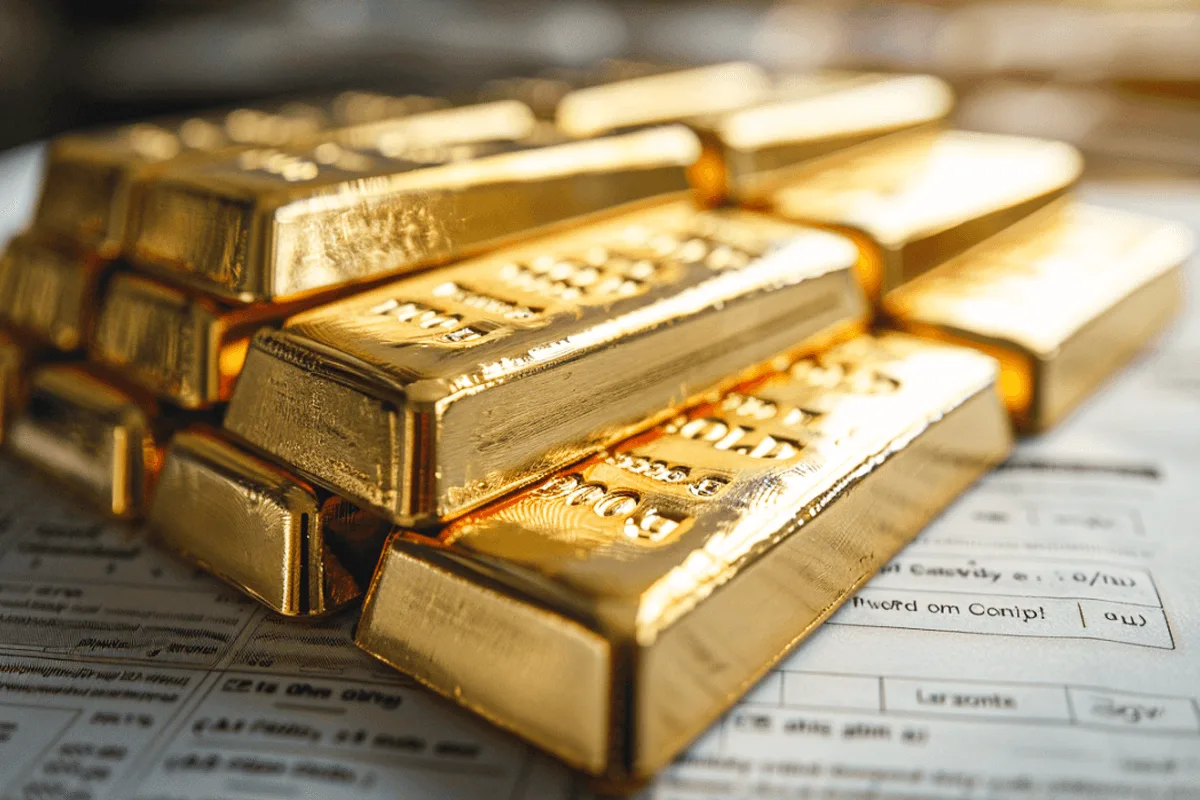
Gold prices have reached historic highs, climbing to around $4,615 per ounce and surpassing $149,000 per kilogram, reflecting strong safe-haven demand amid economic and political uncertainty.
Softer US inflation data and expectations of a gradual easing in monetary policy have reduced real yields, reinforcing gold’s appeal relative to interest-bearing assets.
Political risks, including concerns over Federal Reserve leadership, trade tensions, and geopolitical instability, continue to support elevated investment flows into gold.
Major financial institutions forecast prices to remain in a high range this year, supported by central bank purchases, rising public debt, and sustained investor interest.
Technical indicators confirm a bullish trend despite overbought signals, suggesting possible short-term consolidation without undermining the broader upward momentum.
AI-generated key points
Gold Prices have surged to historic highs, breaking records as the markets navigate a complex web of US Inflation, political tensions, and strained markets. The price of gold has risen to $4,615 per ounce, with recent peaks pushing the price per kilogram beyond $149,000, highlighting continued investor confidence in its role as a safe haven during times of elevated economic uncertainty and market volatility.
Strong Uptrend Maintained Despite Overbought Signals in Gold Prices
The ongoing rally in gold pricing is grounded in a persistent uptrend sustained by multiple fundamental factors. The recent inflation data from the United States reveals a somewhat muted increase in core inflation metrics, reinforcing hopes for a gradual easing of monetary policy by the Federal Reserve. This reduces real yields, thereby making gold more attractive compared to interest-bearing assets.
Investors remain wary of the Federal Reserve’s independence amidst an investigation into its chairman’s conduct, which further unsettles financial markets and boosts demand for gold as a financial protection. The political uncertainty surrounding the forthcoming announcement of potential Federal Reserve leadership only intensifies this dynamic.
Implications of Emerging Political Risks on Gold Demand
Recent geopolitical developments have introduced additional layers of risk affecting global markets. Potential tariffs proposed by the United States on countries trading with Iran have fueled concerns about escalating trade conflicts. Concurrently, military actions in Latin America and diplomatic strains around strategic zones exacerbate fears of broader instability.
Such tensions anchor investment interest in gold, keeping prices elevated as investors seek assets capable of weathering fragile global conditions.
These circumstances frame a cautious yet optimistic outlook as the market contends with intricate geopolitical challenges and fluctuating economic indicators.
Forecasts from Leading Financial Institutions on Gold’s Outlook
Major banks and financial institutions consistently project gold prices to hold within the elevated range of $4,500 to $5,000 per ounce throughout the year. Their stance is supported by factors such as rising US government debt levels, ongoing central bank acquisitions, and continued investor interest through index funds specialized in precious metals.
The resilience of this trajectory is underpinned by technical indicators as well, with moving averages signaling sustained momentum, despite the presence of overbought conditions suggesting possible short-term pauses.
Technical Analysis Highlights and Potential Volatility Ahead
Technical signals reveal that gold’s 21-period moving average remains above the 50-period counterpart on shorter time frames, indicative of a firm bullish bias. The MACD indicator confirms this positive momentum, yet the Relative Strength Index (RSI) climbing beyond 70 points to an overbought state.
Market players should anticipate potential consolidation or a brief correction, although the fundamental drivers supporting gold’s ascent persist unaltered.
Broader Economic Themes Impacting Gold Investment Trends
The evolving landscape of the global economy, marked by incremental policy shifts and latent political instability, continues to shape investment flows. The weakening of the US dollar amid heightened debate over leadership and policy direction adds a layer of complexity.
Investors respond by strengthening their allocations to gold, reflecting broader safeguards against unpredictable market behavior. The precious metal emerges as an essential component of diversified portfolios aiming to mitigate risks associated with market volatility.
Such trends parallel movements observed in other asset classes, with gold often serving as a cornerstone in strategies counterbalancing economic uncertainty.
For insights on recent developments affecting precious metals, readers can refer to market news linking geopolitical chaos and gold prices and monitor forex shifts reflecting pressure on the US dollar.


Gold’s current surge is interesting, but we should remain cautious about potential market corrections in the near future.
Gold’s ascent amid geopolitical risks reaffirms its status as a reliable long-term investment. Staying the course is essential in these uncertain times.
While gold prices soar, is this really a wise investment? Holding physical assets often crumbles under economic realities, and what goes up tends to come down.
Gold prices might be soaring, but is it really a safe haven or just a bubble waiting to burst?